Power tools wholesaleEcommerce

40,500 clicks and 3.72M impressions over 12 months, average position 7.4.

GetHookd, a Facebook ad-spy tool, here's how it shows up in AI.
This audit ran 34 questions through ChatGPT, Claude, Gemini, Perplexity and Google AI. Every one is a question real buyers type in before they choose a business like GetHookd. The gap is open, and every month it stays open is another month of answers going elsewhere. Below is the full picture and the plan to make GetHookd the brand AI recommends.
Every square is one assistant answering one buyer question. 34 questions across 5 assistants.
GetHookd filled 16 of them. The 89 dark squares are answers where AI named no brand it tracks, which is where the room to be named sits.
Every question was asked on each of these assistants, the same tools your customers use to decide.
This audit ran 200 checks: 40 questions across 5 AI assistants. 6 ask about GetHookd by name and are set aside as a control; your visibility results come from the 34 buyer questions that decide who gets recommended.
One real question, one real answer, from the audit generated 2026-08-17.
I'll search for the best Meta ad spy tools for ecommerce brands within your budget. Based on recent 2026 comparisons, here are the best Meta ad spy tools for ecommerce brands under $100/month: Top Picks Under $100/Month Best Overall Value: Minea - Starter plan at $49/month with 10,000 credits, or Premium at $99/month with 100,000 credits and advanced AI features Minea is built for e-commerce and dropshipping, and tracks around 900 million ads across Meta, TikTok, and Pinterest, adding about 90,000 new ads daily.
How often each brand appeared across all 170 tests. When a rival appears at all, AI names 2.3 of them in the same answer on average.
Share of voice is GetHookd's portion of all brand mentions counted in this section, meaning you and the named competitors together. It is a share of mentions rather than a percentage of the 170 tests.
Every one of those mentions started as content someone published. The ones ahead of you published more of it, in more places.
An independent index tracks how often AI assistants cite each brand over time. The lines below are GetHookd against Meta Ad Library, from a source independent of the 170 live tests above.
The numbers above are who AI names right now. The trend below is why: the brands AI cites most across the web are the ones it recommends, and that citation gap has been widening against GetHookd for months.
Plotting the 2 rivals with the most citations, of 12 named in this report.
This independent index holds history for any domain it already tracks, so the trend is real from the first report. It confirms, from a source separate to the live tests, that the gap is persistent.
AI can only repeat what has already been published. Ask it a fresh question and it answers from the content it finds online, so the brands with the most answers in circulation get named and the rest stay invisible.
If you never say it, AI cannot repeat it, and you leave your online reputation to chance or to your competitors.
Closing the gap is a publishing problem, not a technical one. Publish answers to the questions your buyers ask, across the sites the assistants already read, and your brand enters the pool those answers are built from.
The plan later in this report maps which questions to publish against and where to publish them.
Illustrative example. Citations compound as more authoritative content gets published.
Grouped by buying stage. Each pill is one assistant answering one question.
Each red pill is a question with no answer of yours in circulation. Publish one answer, and the assistants have something of yours to name.
Where the gap sits in the buyer journey
34 buyer questions, grouped by how close the buyer is to choosing. The bar is the share of questions in that stage where at least one assistant named GetHookd.
They know they have a problem and are looking for the best way to solve it.
They know the solution and are looking for the best product or service.
They know exactly what they need and are choosing a provider. This is the last question before the sale.
Asked about GetHookd by name. Scored separately, and never counted in the totals above.
AI can describe GetHookd on request, 6 times out of 6. It brings GetHookd up on its own 4 times in 6 when a buyer is choosing a provider.
The stages where your brand is thin are the stages where no answer of yours exists yet. Publishing into those questions is what moves the bar.
These 6 questions include your brand name, so AI naming you here is expected and none of them count in the numbers above. What matters is what the answers say, and if your site is the source.
Across the answers where GetHookd did get named, here is the tone AI assistants strike, and the specifics they raise.
AI assistants describe GetHookd as an ad research platform that filters millions of Meta ads by niche and performance signals, then uses AI to help turn winning concepts into new creatives.
The fastest way to see why the answers above skip GetHookd.
Your site's content lines up with 29 of the 34 questions your customers ask AI.
The assistants can only cite what exists. Every question on the right with no matching content is an answer handed to a competitor.
Every card below is a question set where the answer can change, ranked by how much buying intent sits behind it.
21 questions where AI names a competitor and never names GetHookd. Those buyers get sent somewhere else.
ChatGPT never named GetHookd across all 34 questions. Every customer who asks there gets an answer with your brand missing.
When customers describe a problem, GetHookd shows up in 0 of 14 answers. This is the moment they pick which providers to look at. Miss it and you are off the list before the comparison even starts.
6 answers name GetHookd without linking your site as a source. Links teach the assistant to trust you more next time. A mention without one can fade.
52 answers came from the AI's stored memory, without checking the live web. Your brand only gets into these once it shows up in the sources the assistants read and learn from.
The plan below closes these in order of buying intent.
The pattern behind these numbers shows up the same way in almost every business audited.
Every month you wait, the names AI already knows get named more. If you never say it, AI cannot repeat it.
Most "AEO" and "AI SEO" agencies sell technical fixes that are rarely needed. Here is the common sense they skip.
The chart below shows the two ways brands publish, over 24 months. The grey line is mass-produced AI content pushed onto one site: it spikes when it first gets indexed, then the assistants filter it as spam and it collapses. The orange line is MultiCast content: fewer topics, 8 formats each, placed on trusted sites, where every placement keeps earning citations and the curve keeps climbing.
The method is called MultiCasting. You take one topic your customers ask about, turn it into 8 ready-to-publish formats, and post them across 300+ trusted sites and platforms the AI assistants already read. The assistants keep seeing GetHookd in the sources they trust, so they start naming it in answers.
Getting one topic published across news sites, video, audio and social used to take a team of specialists and weeks of work, so almost nobody did it. The MultiCasting method, invented by the team that fulfils this plan, produces all 8 formats and places them in one campaign. That is why the brands below hold answers your own site alone can never reach.
Track the exact questions typed into ChatGPT, Claude, Gemini, Perplexity and Google's AI answers, plus the sources each assistant cites. That map shows where GetHookd needs to appear.
One topic becomes 8 formats: news articles, blog posts, long videos, reels, podcasts, social posts, infographics and slideshows, published across 300+ sites and platforms the assistants already cite, including YouTube, Spotify and Google News.
Assistants recommend the brands they keep seeing across trusted sources. Each campaign adds citations, citations build authority, and GetHookd becomes the name AI gives your customers.
Buyers ask AI before they decide, across many platforms, not just Google. If AI never names you, you are not in the conversation.
of buyers research before they decide, across many platforms. Google handles about 27% of the 50 billion-plus questions asked daily. The rest happen on the platforms where most businesses never appear.Sources: industry research compiled in the AmpiFire MultiCasting whitepaper.
The same sites the assistants pull answers from when they decide who to name.


and 100s more sites the assistants read when they answer
Real campaigns running the same method behind the plan above, across different kinds of business. Each is one brand's search growth after publishing with MultiCasting.
40,500 clicks and 3.72M impressions over 12 months, average position 7.4.
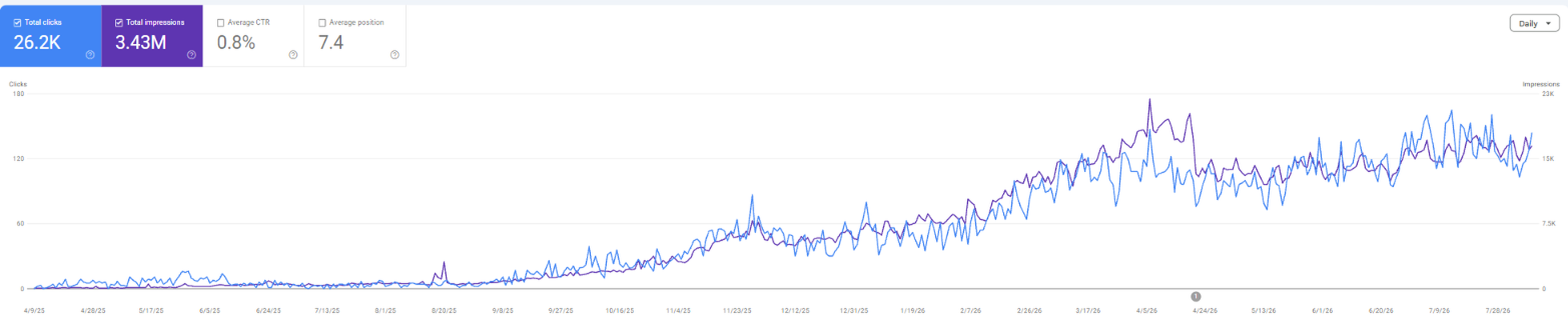
26,200 clicks and 3.43M impressions, daily clicks climbing from near zero to a peak near 180 a day.
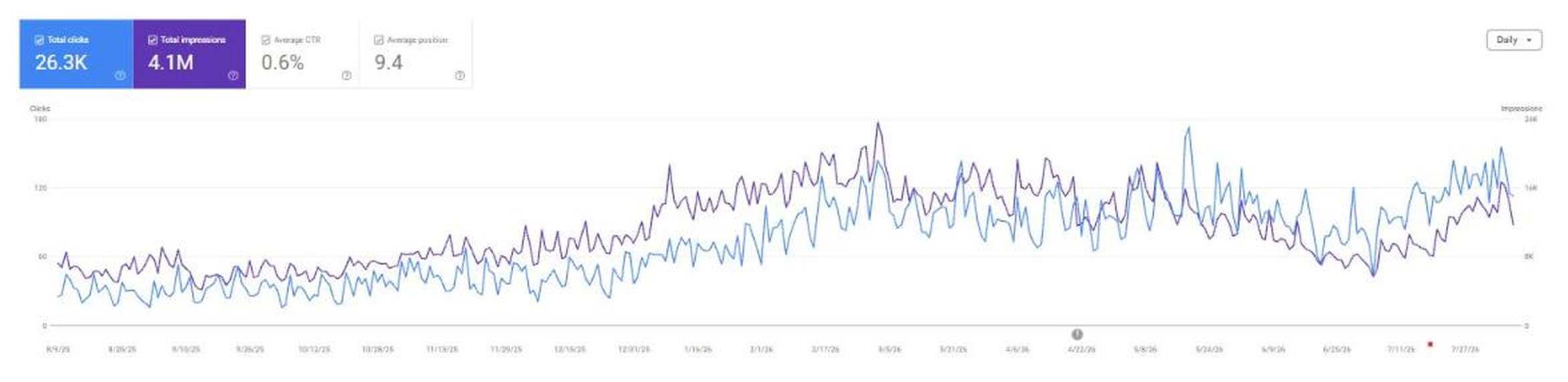
26,300 clicks and 4.1M impressions over 12 months, climbing from 60 clicks a day to a sustained 150 plus.

Daily impressions rising from about 40,000 to peaks near 120,000 over 12 months.
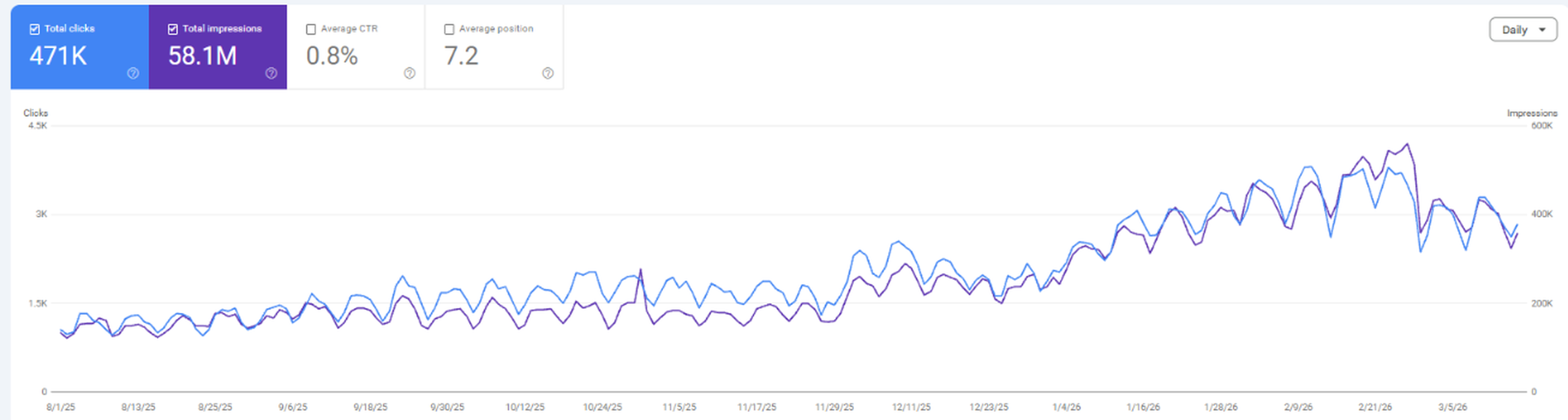
471,000 clicks and 58.1M impressions, average position 7.2.
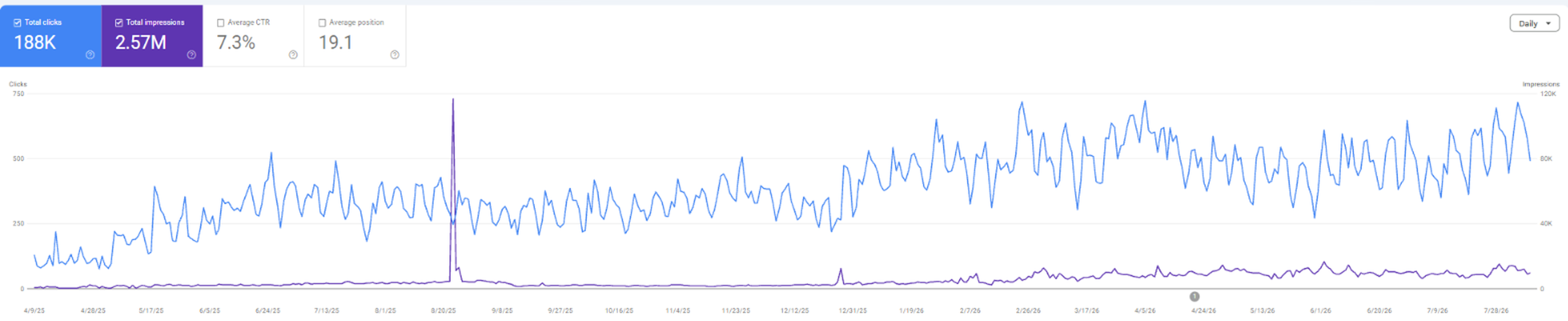
188,000 clicks and 2.57M impressions, 7.3% average click-through.
Each chart is a real campaign, anonymised. Results vary with the business, the category and how many topics run.
"I built AmpiFire to get brands seen everywhere buyers research. This audit shows your gap. The call shows the fix."
Book 30 minutes and walk away with the full 34-question map, the gap analysis for your business, and the exact plan to close it. Straight talk on what it takes and what it returns.
Book Your 30 Minute CallNo obligation. You keep this audit and the full question map either way.